You know how it goes. The last thing you see before you close your eyes is the glow of your phone or the television. The first thing you reach for when you wake up is often the same screen. It has become so automatic that you barely notice it anymore.
Yet that single habit quietly shapes the quality of your rest and the way your nervous system begins the next day. The brain receives strong artificial light and mental stimulation right at the moment it should be winding down, making it harder to fall into deep, restorative sleep.
Putting the screen away at night is ultimately a conscious decision — one that only you can make. No design can force that choice.
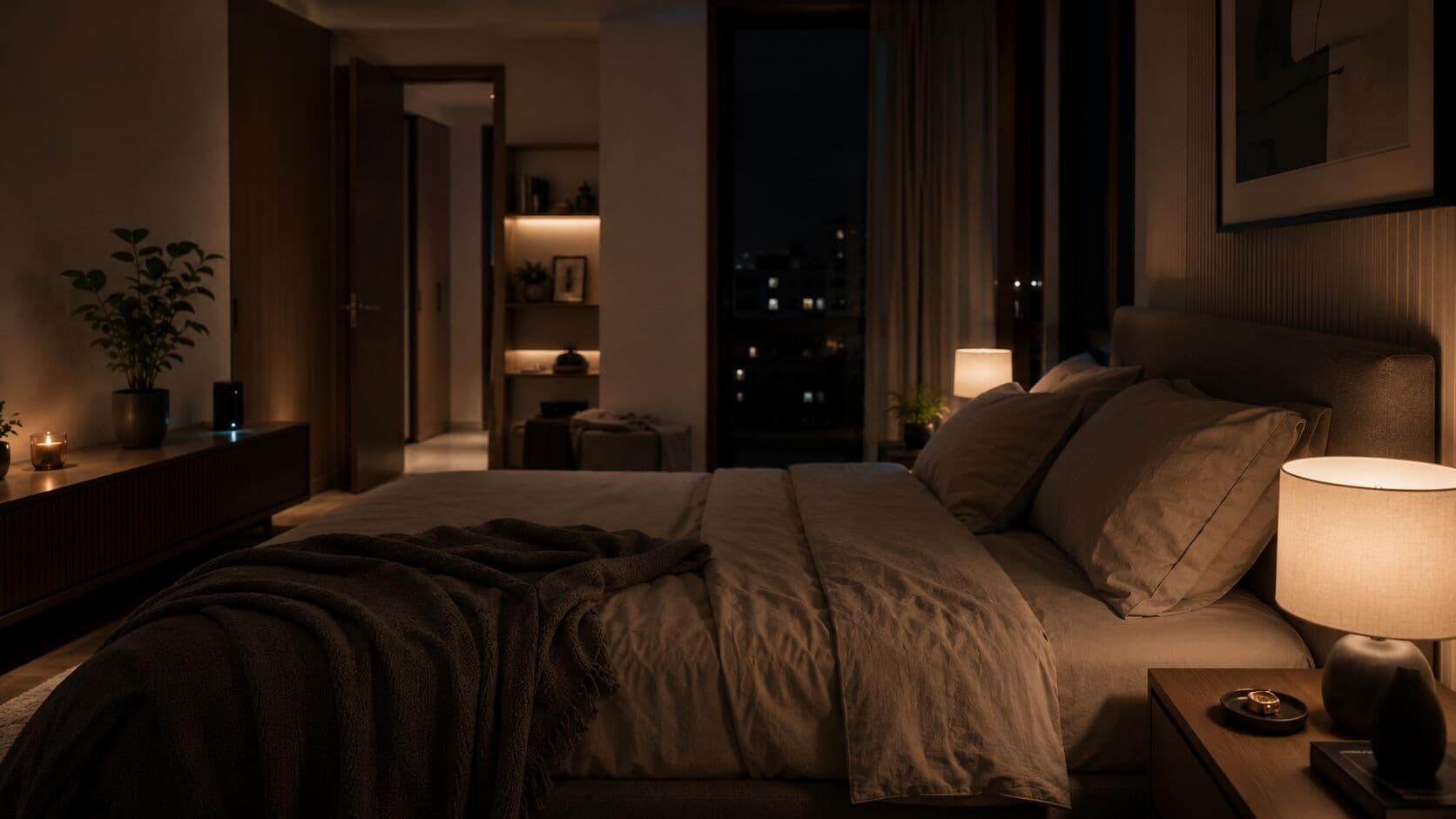
What design can do is create an environment that supports and makes that conscious decision easier and more pleasant. Research from Harvard Medical School shows that even short exposure to blue light in the evening suppresses melatonin production, delaying sleep onset and reducing sleep quality. Studies published in the journal Sleep further confirm that a calm, low-stimulation bedroom environment helps the brain transition into rest mode more effectively. Simple layout and lighting adjustments — such as moving charging stations away from the bed, using warmer and dimmer bedside lighting, and creating a visually uncluttered wind-down zone — can gently support healthier sleep without requiring you to give up technology entirely.
Lucy can help you with exactly this. As our design assistant she listens to your actual bedtime habits, studies the flow and visual cues in your bedroom, and then offers clear, practical recommendations that align with these scientific insights.
The last thing you see before sleeping can still become something that gently prepares you for rest instead of keeping your mind alert.
Lucy is a sharp analyst and that thoughtful designer you need. She studies the precise flow of your evenings and mornings, understands exactly where the friction lies, and delivers targeted design recommendations that bring real ease and calm to your daily routine.