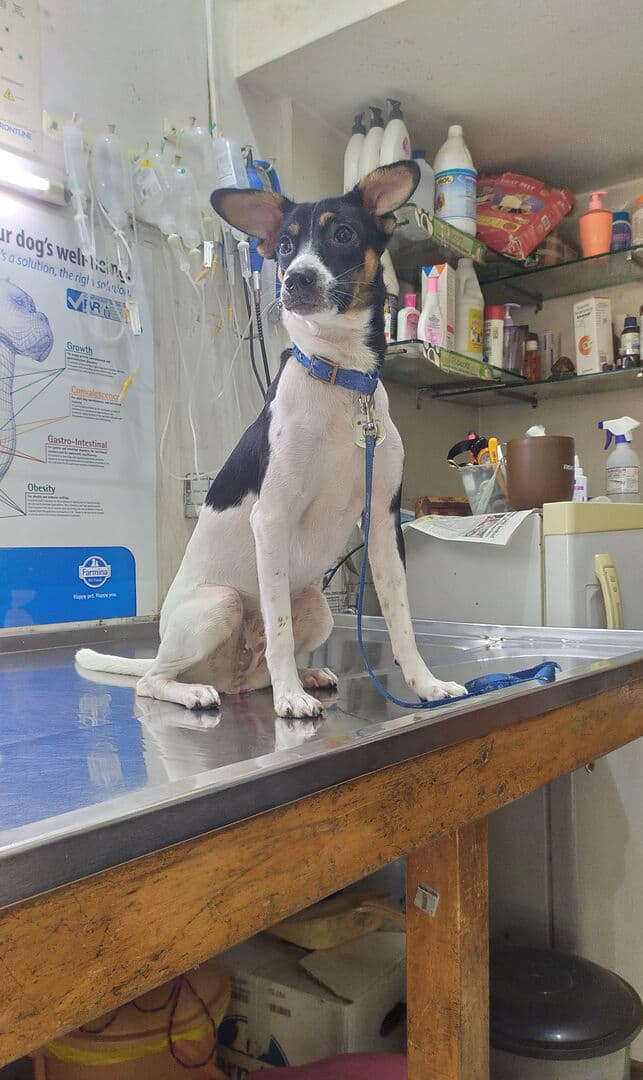
A few months ago, I walked into my dog's usual veterinary clinic for a routine visit. Within minutes, I felt the familiar pressure building behind my eyes. By the time we were done, I could barely keep them open. The headache that followed was so intense I had to lie down in a dark room for the rest of the day.
The culprit wasn't the wait, the noise, or even the clinical smell. It was the lighting.
The clinic had a false ceiling with recessed spotlights. A large ceiling fan rotated directly beneath them, its blades repeatedly sweeping across the light beams. This created a constant, almost imperceptible flickering — harsh white light flickering between 4000K and 4500K. For most people it might have gone unnoticed. For me, it was unbearable.
As someone on the autism spectrum, my nervous system is highly sensitive to visual flicker, especially in that colour temperature range. The combination of the moving shadows and the cold, stark light triggered an immediate sensory overload. I had to close my eyes, breathe slowly, and still felt my body shutting down. I couldn't think. I couldn't function. I just needed to leave.
That day I made a quiet decision: I would find a new veterinary doctor for my dog.
It wasn't about the medical care — the vet himself was excellent. It was about the space.
I have experienced this same flickering, harsh-light issue in so many other places — government offices, health clinics, courtrooms, even. Over time, continual exposure to such poorly designed environments slowly desensitises a person. You stop noticing the discomfort. You push through. And in doing so, you become less sensitive to the subtle cues around you.
A judiciary system that is constantly battling poor lighting and sensory overload may gradually lose its ability to truly feel the vulnerability of a victim. A health clinic that ignores how its environment affects both patients and doctors risks becoming less inclusive and less compassionate. Even a veterinarian, surrounded day after day by flickering lights and visual noise, may slowly become compromised in his sensitivity to the unspoken signals of speechless animals.
This is why well-designed environments matter so deeply. They don't just look beautiful — they preserve our sensitivity, our empathy, and our capacity to care.
When we pay attention to light, flicker, airflow, sound, and sensory comfort, we create spaces that keep us human — more present, more attuned, and more able to respond to the needs of others (and our animal companions).
If you've ever left a place feeling drained, overwhelmed, or inexplicably exhausted — even when nothing "major" was wrong — you know exactly what I'm talking about.
Would you like to understand how your own home, clinic, office, or workspace might be quietly affecting the people who enter it? Lucy can help you see your space through the eyes of your customers, clients, family members — or even your dog. She makes these invisible influences visible.
Just say hello to Lucy whenever you're ready.