Three years ago, I wrote about how I designed my workspace to support how I think and work. A lot has changed since then — including my understanding of myself.
As an architect who has spent years studying how spaces influence our minds, I've always believed that our workspaces should work for us — not against us. For the longest time, my own workstation was a source of subtle stress. I'd sit for long hours, feel my energy drain, struggle with focus, and constantly fight poor posture.
What many people don't know is that I'm on the autism spectrum. This makes sensory regulation, transitions between tasks, and managing overwhelm especially important for me. So when I redesigned my workspace, I approached it with deep personal awareness of what my nervous system actually needs.
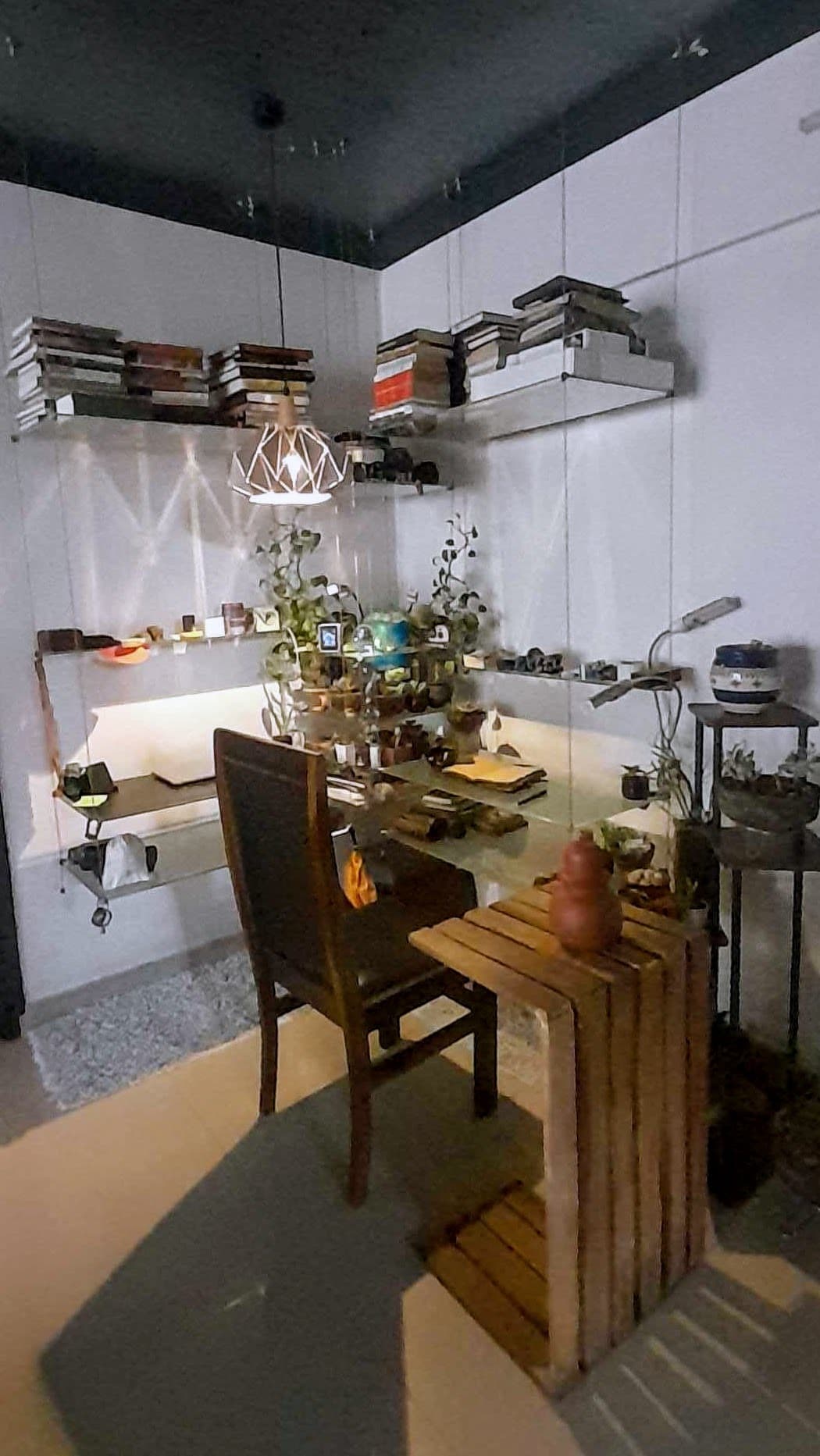
What I created is an L-shaped layout that has genuinely changed how I show up to work every day.
The design is built around three core needs: mental clarity, physical comfort, and creative flow.
On one arm of the L, I have a dedicated digital workstation — clean, focused, and optimised for deep work on the laptop. On the other arm, I created a completely separate manual work zone for sketching, model-making, and hands-on thinking. These two zones allow me to physically shift between different modes of work instead of forcing my brain to switch tasks in the same spot.
I added a small side desk specifically for meals. No more eating at my main workstation — a small but powerful boundary that helps me actually take breaks and separate work from nourishment.
One of my favourite parts is the multi-layered vertical system. The bottom layer is intentionally flexible — I can stretch my legs, change my posture during long hours, or temporarily place items I'm actively using. Every layer can be easily adjusted in height, allowing me to switch between sitting and standing throughout the day.
I also added soft tactile mats on the floor — they provide gentle sensory feedback under my feet while I work, and they double up as placemats for my dogs when they come to sit beside me. Within easy arm's reach, I keep a small collection of puzzles and fidget tools. When I start feeling overwhelmed or overstimulated, I can instantly pause, do a quick puzzle, and reset my nervous system without ever leaving my workspace.
I created an accessible library at the top of the shelving system — within easy reach when I want to grab a book or reference material, yet visually calm when I need to focus.
The entire setup is wrapped in multiple layers of greenery — real plants at different heights, supported by grow lights. A constant AQI monitor quietly ensures the air quality stays excellent, even when I have to keep the windows and doors shut because of Mumbai's intense heat and humidity.
The result? I feel noticeably more patient, creative, and energised. My body doesn't ache as much, my mind feels clearer, and I'm able to move between deep focus and creative exploration with much more ease — all while honouring my neurodivergent needs.
This workstation is not perfect, and it continues to evolve — but it taught me something profound: when we design our spaces with intention, paying attention to even the smallest sensory details, they start supporting our best selves.
If you've ever felt that your home (or workspace) isn't quite supporting the life you want to live — whether you're neurodivergent or simply seeking more calm and clarity — you're not alone. I created Lucy — our AI companion — so you can have thoughtful, personalised conversations about your own space, whenever the feeling strikes.
Would you like to explore how your own workspace or home can better support you? Just say hello to Lucy.