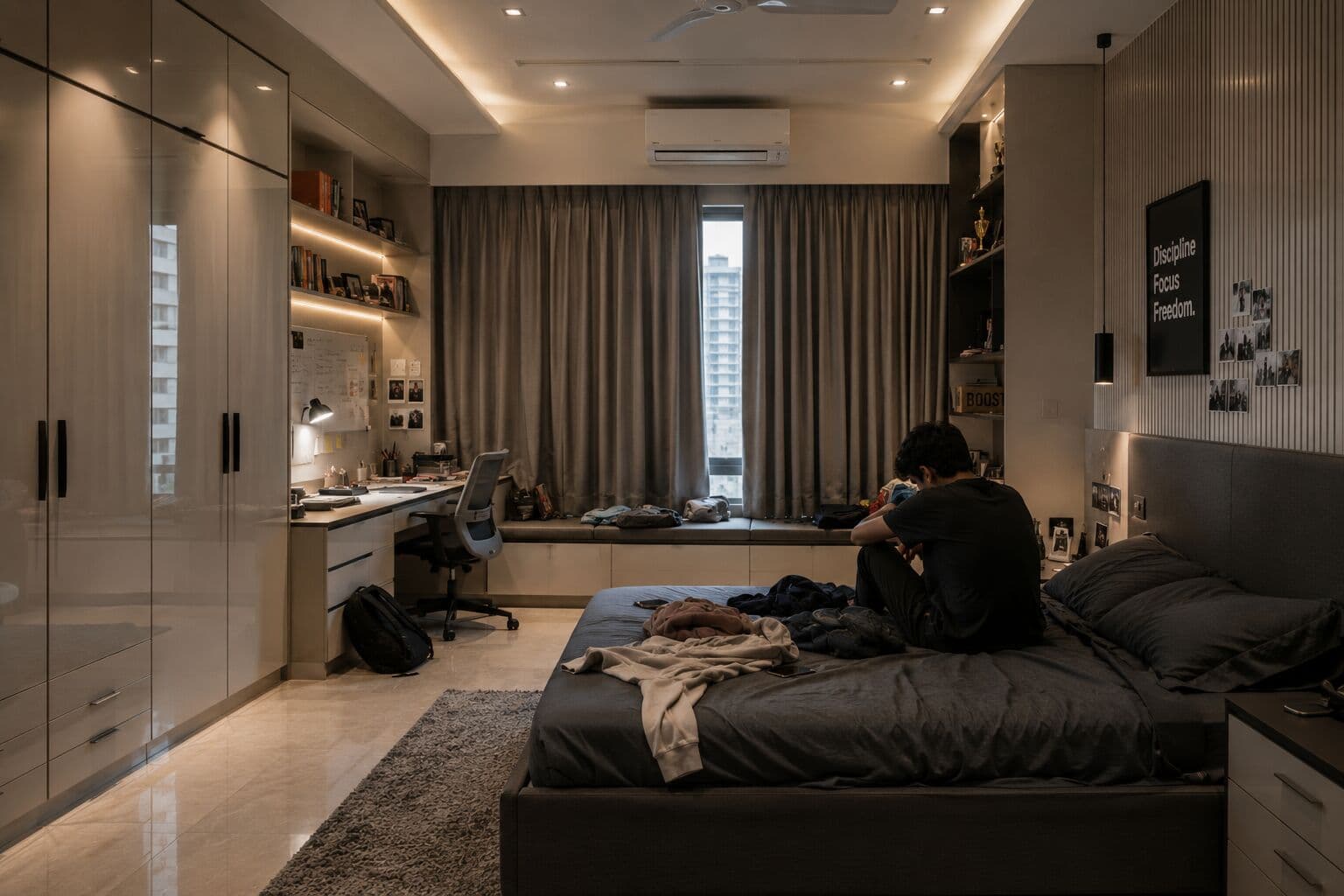
I know a single working mother in Mumbai who lives in a typical 1BHK apartment with her teenage son who has ADHD.
In the small living room, the son tries to study. There is no dedicated workspace. Whenever I visit, he has to quickly gather his books and shift everything to the bedroom. The mother tries to manage everything — work calls from one corner, cooking in the open kitchen, and keeping the peace — while her son's nervous system is asked to adapt to constant transitions and distractions.
For a typical brain, these might feel like minor inconveniences. For a teenage boy with ADHD, they are far more significant. The lack of a consistent, predictable workspace makes it harder to maintain focus. The sudden shifts from living room to bedroom disrupt his train of thought and increase mental fatigue. By the end of the day, he is often overwhelmed, restless, and emotionally drained.
We all know how difficult it is for a single mother in a Tier-1 urban city like Mumbai — already stretched thin, trying to make ends meet, and doing her best with the space she has. It's easy to think these problems are simply "part of living in a small home" and that there's nothing more she can do.
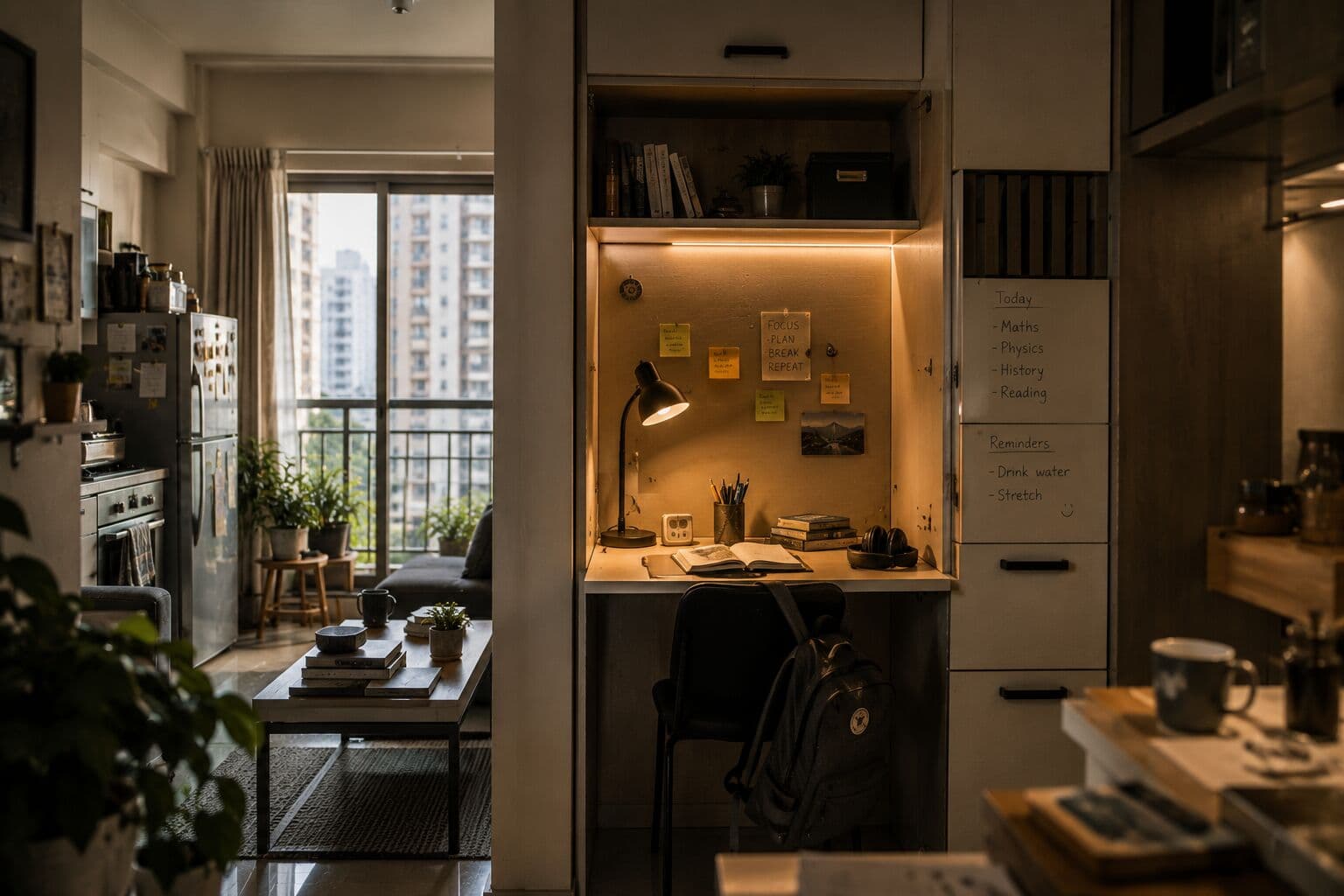
Yet there are gentle, realistic solutions that don't require a bigger apartment or expensive renovations. This is where Lucy steps in as our design assistant. She listens to the specific challenges of the home and suggests practical, multi-utility solutions — convertible furniture that opens up into a quiet study nook for the son and folds back into a compact form when guests arrive, and small design adjustments that create predictability and calm without adding more stress to an already full plate. Whatever unconventional or creative solutions Lucy might suggest, our Zuiora design team can ensure they are custom-built and executed to perfectly suit your real-life needs.
Even in the tightest 1BHK layouts, it is possible to create small pockets of calm that help a neurodivergent mind stay focused and perform better.
If you have a child, teenager, or loved one with ADHD (or any form of neurodivergence) and you've ever felt that your home seems to make things harder instead of easier, you are not imagining it — and you are not alone.
Moments like these are what led me to create Lucy. She helps translate these everyday struggles into simple, doable ideas that fit real life.
Would you like to explore how small design changes could help someone you love feel more at ease in their own home? Just say hello to Lucy.