Back to blog
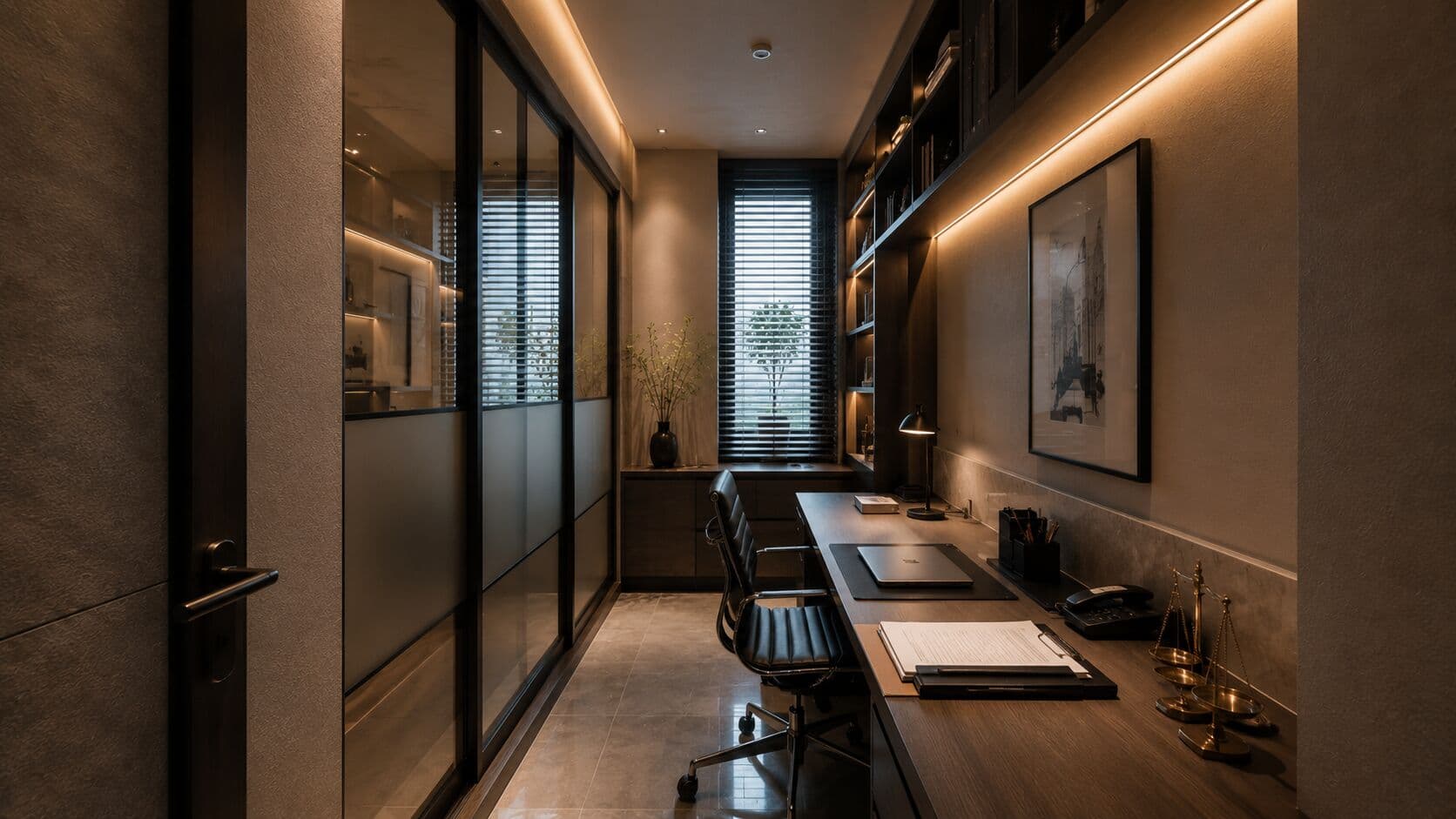
A narrow rectangular cabin office that forces the occupant to shrink
Tap to see full image
Health & Wellbeing

The Cabin That Makes You Feel Like a Giant – And the AI That Helps You Resize

NikitaMay 18, 20262 min read
Share

Every time I step into my lawyer's office in Colaba, the narrow rectangular cabin forces me to turn sideways just to reach the desk. As I lean forward to sign the paperwork, my elbow inevitably knocks against the glass partition. It happens every single time. The space feels claustrophobic, and without thinking I start shrinking myself — pulling in my shoulders, tucking my elbows, making my movements smaller — so I don't bump into anything.

Have you ever been in a space so tight that you suddenly felt oversized, like a giant crammed into a dollhouse? Maybe it was a tiny consultation room at a clinic, a cramped cabin in a government office, or even a narrow workstation in a shared apartment. In that moment you unconsciously reduce your own size to fit the space, as if your body is the problem and the layout is fixed and unchangeable.

Over time we simply accept it as normal. "It's a narrow rectangular layout," we tell ourselves. "What else can you do?" We learn to navigate it, to contort ourselves, to ignore the quiet discomfort and move on with the task at hand.

But a space does not have to force you to shrink. Lucy looks at these challenging layouts differently. As our design assistant she studies how people actually move through the room — where elbows naturally land, how shoulders tense, how the body instinctively pulls inward. She then suggests customised solutions that respect the human body instead of asking it to adapt. A slightly reconfigured desk line, a recessed glass panel, a more intelligent use of vertical space — small, thoughtful adjustments that turn the same narrow rectangle into a space that feels generous rather than confining.

The narrow cabin you have been squeezing into does not have to remain a place of quiet discomfort. It can still become comfortable, respectful, and easy to move in.

Lucy is here whenever you feel ready to explore those possibilities. She will simply listen to how you experience the space and offer clear, practical recommendations that make even the most challenging layout work for you.

Want to explore how your space can better support you?

Talk to Lucy — our AI design companion.

Talk to Lucy
Share

Comments

Related articles

Bright, minimalist kitchen with natural wood countertops, glass jars, and ceramic bowls, promoting a plastic-free home.
Health & Wellbeing

The Plastic Invasion: How It Sneaked Into Our Homes and Refuses to Leave

Discover how plastic quietly took over our homes, from everyday items to hidden building materials. Learn about its serious health impacts and find practical steps for a healthier, lower-plastic home environment.

plastic in homeshome healthtoxic materialsindoor air qualityinterior designmicroplasticseco friendly homesustainable livingmaterial choiceshealth and wellbeing
NikitaJun 29, 20265 min read
A peaceful indoor pathway with natural textures and a soft curve, inviting slow, mindful movement and a sense of calm.
Health & Wellbeing

The Lost Art of Slow Walking: Reclaiming Presence in a Rushed World

Discover how modern design accelerates our pace, contrasting with historical paths that fostered mindful movement. Learn how intentional home design can help reclaim a slower, more present rhythm for enhanced wellbeing.

slow livingmindful movementspatial designwellbeing designstress reductionhome environmentdesign for focusattentive walkingpresenceintentional design
NikitaJun 18, 20263 min read
A bright, open living space with a sit-stand desk and uncluttered pathways that invite movement
Health & Wellbeing

12+ Hours of Sitting at Work: The Silent Damage to Your Health — And How Your Home Interiors Can Help

Sitting 10–12 hours a day quietly raises your risk of metabolic, cardiovascular, and mental health issues — and your home may be reinforcing it. Thoughtful interior design can build natural movement back into everyday life.

sedentary lifestyleprolonged sittingactive designhome designmovementergonomicsworkspacephysical healthposturewellbeing
NikitaJun 12, 20265 min read